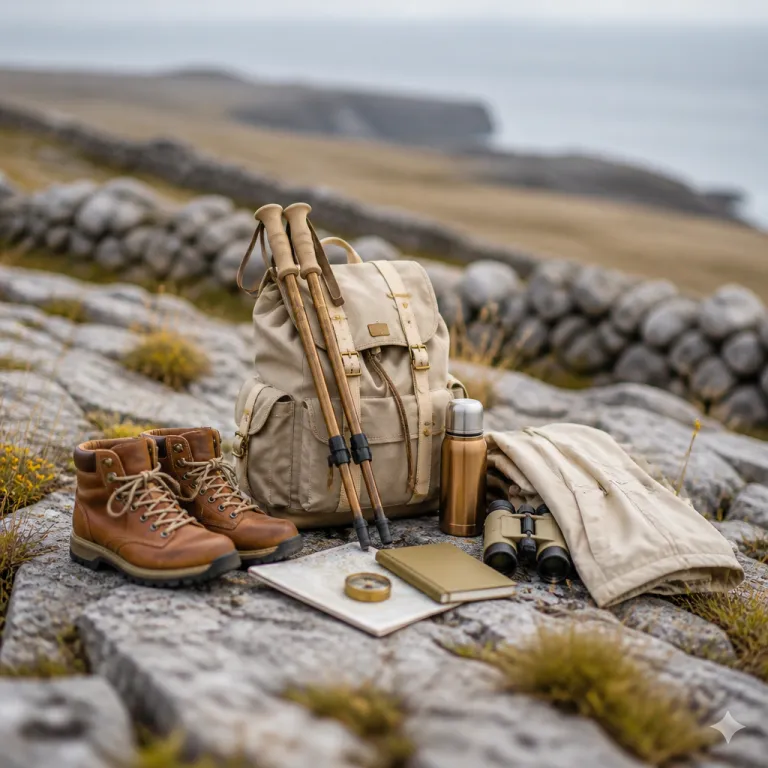
Reading the April weather on the Burren Way with a mindful eye
Planning the Burren Way hiking itinerary in April weather invites a slower rhythm. This long distance trail in west Ireland rewards walkers who treat each day as a moving meditation, adjusting their pace to the changing light and Atlantic skies. When you frame every walk as a chance to listen to your breath and the wind together, the entire route becomes a gentle classroom in presence.
April in this part of Ireland usually brings average daytime temperatures around 10 °C, which feels cool but comfortable for steady walking along the coast and through the karst limestone hills. Showers can sweep in quickly from the wild Atlantic, so attentive hikers learn to pause, layer up, and read the clouds rather than rush the miles on the trail. One walker described watching a grey curtain of rain move across Liscannor Bay, counting ten slow breaths before zipping a jacket and moving on. This responsive attitude to the elements turns the Burren landscape into a partner rather than an obstacle, especially on exposed sections near the cliffs and higher ground.
The Burren Way Committee, working with Sport Ireland and the Irish Trails network, oversees maintenance of the route, and their work keeps waymarking clear enough that you can relax into the walk instead of constantly worrying about navigation. They recommend walking on marked trails and using weather appropriate clothing, which aligns perfectly with a reflective approach that values safety and comfort over speed or distance. When you know that the official trail length is about 114 km, you can plan each day with realistic expectations and leave trace only in the form of quiet memories, not litter or erosion. For the most up to date route notes, diversions, and public transport suggestions, consult official Burren Way information through local tourism offices and national trail resources before you set out.
Designing a five day Burren Way itinerary as a wellness retreat
A thoughtful Burren Way hiking itinerary in April weather can follow the classic five day structure while still leaving space for rest and reflection. One common route begins in Lahinch on the west coast, then continues through Doolin, Lisdoonvarna, Ballyvaughan, Carran, and finally reaches Corofin in the heart of County Clare. Each day offers a different landscape, from ocean cliffs and stone walls to inland karst limestone pavements that feel almost lunar in their stillness.
On the first day from Lahinch to Doolin, you trace part of the coast with views towards the Cliffs of Moher and the wider wild Atlantic horizon. The distance is roughly 18–20 km, often taking five to six unrushed hours including pauses. This is an ideal place to practice steady, conscious walking, using the sound of waves and the rhythm of your steps as anchors for attention along the trail. Some walkers choose to extend the route with a section of the Moher Trail near the Cliffs of Moher, but in April you should allow extra time for wind, rain, and slippery ground.
The second and third days often lead from Doolin to Lisdoonvarna and then towards Ballyvaughan, passing close to Doolin Cave and the quiet village roads that thread between ancient stone walls. These stages usually cover 16–22 km per day and are rated easy to moderate, which suits a wellness focused journey where you want to arrive with enough energy for stretching, journaling, or a short guided meditation. A simple end of day ritual might be to write three lines about what you saw, heard, and smelled on the trail before dinner. You can then adapt similar contemplative rituals to the Burren’s west Ireland shoreline, letting the changing Atlantic light shape your reflections.
Mindful pacing, rest days, and listening to your body
Wellness oriented hikers treat the Burren Way hiking itinerary in April weather as a framework, not a rigid schedule. While the official timeline suggests five consecutive days, many reflective walkers add a rest day in places like Doolin, Ballyvaughan, or Corofin to let the body and mind integrate the journey. A rest day also allows you to explore local cafés, practice gentle stretching, or simply sit quietly facing the west coast light. One traveller recalled an afternoon in Ballyvaughan spent watching rain bead on a café window, feeling the relief of not having to chase a timetable.
Sections such as the approach to Black Head or the inland climb towards Carran can feel longer when April winds rise, even if the distance in miles remains modest. On these days, route notes become more than technical guidance; they are invitations to check in with your energy, adjust your pace, and decide whether to shorten the walk or linger in a sheltered valley. This is where the easy to moderate grading of many stages supports calm decision making, because you are not locked into extreme terrain that demands constant physical strain. Planning daily distances in the 15–23 km range, with walking times of five to seven hours, gives enough margin for weather delays and unhurried breaks.
Some travellers pair this Irish hike with other restorative journeys, such as a mindful safari and ocean retreat that moves from wild savannah to healing shores. The same principles apply on the Burren Way: respect your limits, savour quiet moments, and let the landscape set the tempo. If you feel tired after a long day near the cliffs or the Burren cliffs above the coast, giving yourself permission to stop early can be the best time saving decision for long term wellbeing.
Weather, gear, and sensory awareness along the west Ireland coast
April weather on the Burren Way often shifts between bright intervals, low cloud, and brief Atlantic squalls. This variability can support mindful travel when you treat each change as a cue to notice your senses more fully along the walk. Instead of chasing the best weather, you learn to appreciate the texture of rain on your jacket, the smell of wet stone walls, and the way light returns over the west coast after a shower. On some days you may hear nothing but your own footsteps and distant surf for several minutes at a time, a rare kind of quiet that encourages deeper attention.
Because temperatures hover around 10 °C, layered clothing is essential for comfortable hiking in County Clare, especially on exposed stretches near the cliffs and open karst limestone plateaus. Waterproof boots, a breathable shell, and a warm mid layer allow you to keep moving safely while still pausing for contemplative moments without getting chilled. Carrying a light hat and gloves can transform a windy day near Black Head or the Moher Trail into a peaceful experience rather than a test of endurance. A small dry bag for spare socks and a compact sit mat can also make wet lunch stops more pleasant.
Digital trail guides are increasingly used on the Burren Way, and they can support mindfulness when handled with intention. Download maps for offline use, then keep your phone on airplane mode so you only check your route notes at key junctions instead of constantly watching the screen. This approach honours the Burren Way Committee’s emphasis on clear waymarking and lets your attention rest on the cliffs, the wild Atlantic horizon, and the subtle colours of the Burren landscape rather than on notifications. Many walkers find it helpful to take a single photo at the end of each day rather than documenting every viewpoint, keeping most of their focus on direct experience.
Landscapes, heritage, and mindful encounters on the Burren Way
The Burren Way hiking itinerary in April weather leads you through one of Ireland’s most distinctive regions, where karst limestone pavements, green fields, and Atlantic cliffs meet. As you walk from Lahinch towards Doolin and beyond, the changing landscape invites you to slow down and notice details such as tiny alpine flowers growing between rocks or the pattern of ancient stone walls. This kind of attentive walking turns each day into a moving meditation on time, geology, and human presence.
Near the Cliffs of Moher and the Burren cliffs above the coast, the contrast between vertical rock faces and rolling fields can feel dramatic yet strangely calming. Many hikers find that pausing to watch seabirds riding the wind or waves breaking far below helps them reconnect with their breath and posture. Inland, the approach to villages like Carran and Corofin reveals softer contours, where farms, small roads, and historic sites show how west Ireland communities have adapted to this demanding environment. A short detour to a ruined church or ringfort can turn a simple lunch stop into a quiet moment of reflection on older ways of life.
Side trips can deepen the experience without overwhelming your schedule, especially if you have built a rest day into the route. A mindful visit to Doolin Cave, for example, offers a quiet counterpoint to the open sky of the coast, while a boat trip towards the Aran Islands on a calm day can extend your sense of the wider wild Atlantic seascape. Even if you never reach the Causeway Coast further north, reflecting on these different Irish shorelines can enrich your appreciation of how cliffs, islands, and ocean shape both culture and inner life. In the evenings, listening to traditional music in a village pub can add another layer of connection to place.
Ethical walking, Leave No Trace, and mental wellbeing
Mindful travel along the Burren Way in April weather is inseparable from ethical walking practices. The Burren’s fragile karst limestone, rare flora, and thin soils are vulnerable to erosion, so staying on the marked trail is an act of care rather than restriction. When you follow Leave No Trace principles, you protect both the landscape and the quiet atmosphere that supports mental rest. Simple habits such as carrying a small rubbish bag or closing farm gates behind you quickly become part of the rhythm of the day.
“Is the Burren Way suitable for beginners? Yes, with moderate fitness and preparation.” This guidance from local information reflects the easy to moderate grading of many stages, which makes the route accessible to travellers using hiking as part of a wellness journey. By planning realistic daily miles, carrying sufficient water and snacks, and booking accommodations in advance, you reduce stress and create more space for reflection at the end of each day. Many walkers use a mix of guesthouses, small hotels, and B&Bs in Lahinch, Doolin, Ballyvaughan, and Corofin, often arranging luggage transfers so they can carry only a daypack.
Ethical choices extend beyond the path itself, from supporting local accommodations in Lahinch, Doolin, Ballyvaughan, and Corofin to choosing guided tour services that respect wildlife and community rhythms. For travellers who enjoy seasonal contrasts, a mindful cold weather retreat in a mountain or lakeside setting can complement the softer April climate of west Ireland. Over time, these layered experiences help you understand that the best time for any journey is when you can move slowly, pay attention, and leave each place slightly better than you found it.
Key figures for mindful hikers on the Burren Way
- The Burren Way extends for approximately 114 km, or about 71 miles, which typically translates into five walking days for hikers with easy to moderate fitness levels.
- Average April temperatures around 10 °C in County Clare create cool but stable conditions, reducing heat stress and supporting steady hiking paces for wellness focused travellers.
- A five day itinerary usually involves 15 to 25 km per day, allowing time for mindful breaks, short detours to sites like Doolin Cave, and at least one optional rest day.
- Growing interest in eco tourism and multi day hikes has increased the use of digital navigation tools on the Burren Way, encouraging hikers to download route notes and maps before leaving areas with reliable signal.
- The trail’s combination of coast, inland hills, and karst limestone plateaus means that weather can change quickly, so carrying layers adds only a small weight cost while significantly improving comfort and safety.
FAQ about mindful walking the Burren Way in April
Is the Burren Way suitable for beginners seeking a wellness focused hike ?
The route is considered suitable for beginners with moderate fitness, especially when stages are planned conservatively and at least one rest day is included. Many sections are graded easy to moderate, which allows time for mindful pauses without pressure to rush. Using official route notes and staying on the marked trail further reduces stress for first time long distance walkers.
What kind of weather should I expect on the Burren Way in April ?
April in west Ireland usually brings cool temperatures around 10 °C, mixed with showers, bright intervals, and occasional stronger winds along the coast and cliffs. Conditions can shift quickly over the karst limestone and open hills, so layered clothing and waterproof gear are essential. Planning shorter days near exposed sections such as Black Head or the Cliffs of Moher helps you adapt calmly to changing skies.
Are guided hikes available for the Burren Way, and are they helpful for mindful travel ?
Several local companies in County Clare offer guided hiking options, ranging from single day walks near Lahinch or Doolin to full route support. Guided experiences can enhance mindfulness by removing navigation worries and providing context about geology, flora, and cultural history. Travellers who prefer independent walking can still benefit from digital trail guides and occasional local advice from the Burren Way Committee.
What wildlife and natural features might I notice while walking mindfully ?
The Burren is known for its diverse flora, including alpine and Mediterranean species growing side by side in limestone grikes, as well as birds and occasional mammals. Mindful hikers often notice small details such as lichen patterns on stone walls, changing colours on the cliffs, and the sound of seabirds along the wild Atlantic coast. Slowing your pace and pausing regularly makes these encounters more frequent and meaningful.
How can I align my Burren Way hike with Leave No Trace principles ?
Staying on the marked trail, packing out all litter, and avoiding damage to stone walls or sensitive vegetation are core practices on the Burren Way. Choosing local accommodations, respecting farmland boundaries, and keeping noise low in villages and on the route also support community wellbeing. By planning carefully and walking gently, you protect both the landscape and the contemplative atmosphere that makes this Irish journey so restorative.