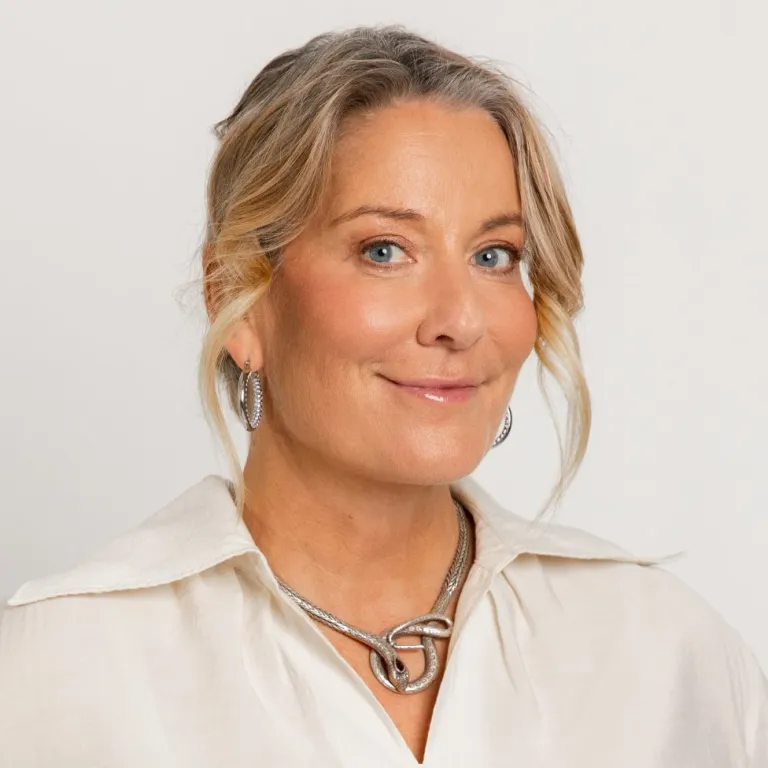
Anna, you’ve been described as a wellness pioneer long before “well-being” became a buzzword. How did your journey from finance to biogeometry, shamanic practice and ultimately founding Wahayla shape your personal definition of what a truly innovative luxury spa experience should be today?
My background probably explains why I've always been comfortable bringing together worlds that traditionally didn't belong together. I studied finance, so I naturally think strategically and commercially. But I was also deeply curious about why some people thrive while others don't, even when they have access to the same healthcare or lifestyle.
That curiosity took me into functional medicine, longevity science, energy medicine, biogeometry, indigenous healing traditions and ultimately shamanic practices. Rather than seeing these as opposing disciplines, I saw pieces of the same puzzle.
For me, luxury wellness has never been about adding more treatments to a spa menu. True luxury is helping someone leave feeling fundamentally different from when they arrived. Sometimes that comes through advanced diagnostics and personalised longevity protocols. Sometimes it comes through profound silence, connection to nature or a powerful ceremony that helps someone reconnect with themselves.
With Wahayla, I have the freedom to explore this integration even further. The future isn't science versus spirituality. It's understanding when each has something valuable to contribute. Innovation happens when we stop asking which discipline is right and instead ask what serves the individual sitting in front of us.
You helped transform Six Senses from a spa-led hotel brand into a holistic wellness benchmark, and later co-created concepts like Six Senses Ibiza and Rosebar. Can you walk us through one or two concrete decisions or program elements where you deliberately broke with traditional spa thinking to create a new kind of experience?
One of the biggest shifts was making wellness the foundation of the entire guest experience instead of something that happened inside the spa.
When I joined Six Senses, we asked ourselves a simple question: why should wellness only begin when someone walks into a treatment room? That thinking led us to redesign everything—from bedrooms supporting circadian rhythms and sleep, to nutrition, movement, recovery, mindfulness and personalised wellness screening. Wellness became embedded throughout the guest journey rather than being an optional add-on.
Another important decision was introducing Integrated Wellness Screening. Traditionally, every guest received the same menu of treatments. Instead, we wanted to understand each individual's physiology before recommending anything. That allowed us to personalise programs in a much more meaningful way.
More recently, projects like RoseBar represent another evolution by bringing medical expertise into hospitality in a seamless, approachable way. Rather than creating clinical environments, we're creating beautiful spaces where longevity medicine, diagnostics and hospitality complement one another.
The common thread has always been integration. Guests shouldn't have to choose between feeling pampered and improving their health. They deserve both.
Your work at Wahayla combines science, spirituality, longevity and energy medicine—domains that don’t always sit comfortably together in a luxury context. How do you design spa and wellness journeys that integrate blood work, diagnostics and performance medicine with meditation, breathwork and subtle-energy practices in a way that feels both credible and deeply experiential for demanding guests?
The starting point is always credibility.
We begin with evidence-based assessments where appropriate—blood work, biomarkers, functional health evaluations or physiological testing. These create an objective understanding of where someone is today and allow measurable outcomes.
But human beings are more than biology.
Stress, purpose, relationships, emotional health and meaning influence longevity just as profoundly as cholesterol or muscle mass. Once we've established someone's physiological picture, we build practices that regulate the nervous system, improve emotional resilience and reconnect people with themselves.
Breathwork, meditation, nature immersion and energy-based practices are not presented as alternatives to science. They're presented as complementary tools that influence many of the same biological systems we're measuring.
Interestingly, guests are becoming increasingly open to this integrated approach. They don't necessarily want more technology. They want to understand themselves better. If we explain why something works, and if they experience the results personally, the distinction between science and spirituality becomes much less important.
Biogeometry and the idea of “feeling life force in the heart” are quite esoteric for many operators. How do you translate such subtle concepts into tangible design, programming and guest-touchpoints in hotels, clinics or corporate wellness projects so that people can actually sense the difference rather than just read it on a brochure?
never expect guests to believe in concepts simply because we describe them.
Instead, we focus on creating environments that people experience before they analyse them.
Biophilic design, natural materials, balanced proportions, acoustics, light, scent, sacred geometry, quiet spaces and thoughtful transitions all influence how people feel long before they consciously notice why.
The same applies to programming. A beautifully designed breathwork session, sound journey or meditation doesn't require someone to understand subtle energy. They simply notice that they feel calmer, clearer or more connected afterwards.
I'm less interested in convincing people about invisible forces than I am in helping them experience measurable changes in how they feel.
The experience should always speak louder than the explanation.
Luxury spa guests today are more educated, but also more skeptical—they want measurable results, emotional depth, and Instagrammable moments all at once. From your consulting work with leading hotel groups, what are the biggest misunderstandings or blind spots you see when brands try to innovate in wellness and longevity, and how do you help them overcome these?
The biggest blind spot is believing that one person can build a world-class wellness offering.
I see this all the time. Hotel companies appoint a Head of Wellness and expect that person to develop the strategy, create the concepts, write the programs, work with architects and designers, source equipment, train teams, oversee operations, drive innovation and somehow make the business commercially successful. It's simply impossible.
Creating genuine wellness in hospitality takes a multidisciplinary team. You need subject matter experts in wellness, longevity, nutrition, fitness and medicine to create credible programs. You need commercial and development people who understand how to build a profitable business. You need technical services and designers who know how to translate wellness into the physical environment. You need experienced operators who understand how to deliver these concepts consistently across multiple properties. And finally, you need trainers who can transfer knowledge and create confident teams on the ground.
Wellness isn't a department anymore. It's an ecosystem.
The brands that will lead over the next decade are those that recognise that wellness has become as sophisticated as food and beverage or hotel operations. You wouldn't expect one chef to design every restaurant concept, oversee construction, source suppliers, train every cook and run every kitchen in the world. Wellness deserves the same level of expertise and investment.
Technology is important, but people remain the real competitive advantage. The strongest wellness brands invest as much in human capital as they do in facilities.
Looking ahead, how do you imagine the next generation of high-end spa and wellness experiences—especially at the intersection of longevity, consciousness and hospitality? Are there specific technologies, modalities or spatial concepts you believe will redefine what “luxury wellness” means in the next 5–10 years?
I believe we'll move away from isolated spas towards complete wellness ecosystems.
Hotels, residences, members' clubs, medical partners and digital platforms will work together to support guests throughout the year rather than only during a holiday.
Longevity medicine will become far more preventative and personalised. AI will help interpret data and create highly individual recommendations. However, I also believe we'll see an equally strong movement back towards simplicity—silence, nature, ritual, community and human connection.
The greatest luxury won't be having access to more information. It will be knowing how to filter the noise.
Spatially, we'll see environments designed around nervous system regulation, circadian health, acoustics, air quality, natural light and subtle energetic harmony rather than simply beautiful interiors.
Ultimately, I think the future belongs to places that successfully integrate the measurable with the meaningful.
For owners, operators or therapists who feel called to go beyond massages and facials but don’t know where to start, what is one practical step they can take now to infuse more depth, meaning and innovation into their spa experiences—without losing commercial viability or overwhelming their teams?
My first piece of advice would actually be to bring in someone who has done it before.
There are now consultants and companies with years of experience creating successful wellness destinations, integrated wellness programmes and longevity concepts. Before investing in facilities or hiring new staff, take the time to develop a clear strategy. Understand where you are today, where you want to be and what capabilities you'll need to get there. That roadmap will save enormous amounts of time, money and frustration later. Naturally, Wahayla is one example of a company that helps organisations navigate exactly this journey.
The second step is to invest in at least one highly qualified wellness expert on property. This could be a naturopath, an exercise physiologist, an Ayurvedic doctor, a functional medicine practitioner or another professional with recognised expertise in building personalised wellness and longevity programmes.
That person becomes much more than a therapist. They become a guide—for guests, for the spa team and for the wider hotel. They help personalise experiences, educate colleagues, build credibility and create continuity across the guest journey.
You don't need to become a medical clinic overnight. But having one true expert with the knowledge and authority to lead your wellness offering changes the entire conversation. It shifts the spa from delivering treatments to delivering meaningful transformation.
Learn more: https://wahayla.com