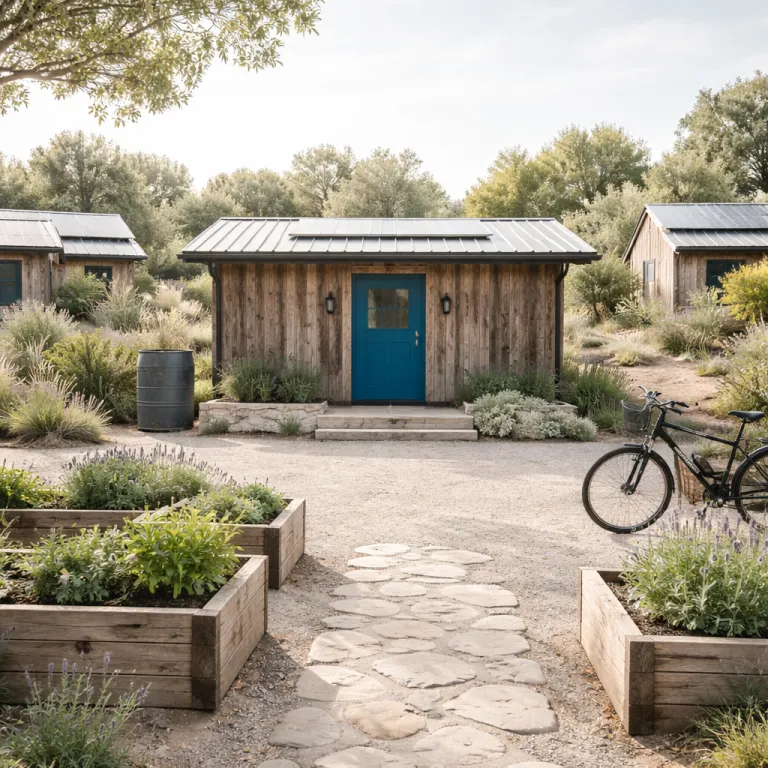
From wellness product to village practice: why ownership matters
Community owned wellness accommodation is no longer a niche experiment. It is a structural answer to travelers who want every retreat to support the people whose land, culture, and nature hold their practice. When 69 percent of travelers say they want trips that leave places better than they found them, according to Booking.com’s 2023 Sustainable Travel Report, ownership becomes the quiet KPI that decides whether your stay heals or extracts.
At its core, a community owned wellness accommodation is a lodging property where local residents collectively own and manage the space, the spa services, and the wellness experiences. Profits circulate through the village rather than disappearing into distant balance sheets, which means your meditation or breathwork session funds the school roof or the organic farm irrigation line. The Global Wellness Institute’s Wellness Tourism Initiative, in its report “Wellness Tourism: Global Landscape and Trends”, has identified roughly fifty such establishments worldwide, a small number but a sharp signal in a market dominated by large hotels and every new wellness resort acquisition.
For wellness minded business travelers extending a work trip, this model changes the texture of the stay. Instead of a generic wellness programme, you enter a living system where community members are owners, hosts, and often guest expert teachers. The communal spaces are not design gestures but working rooms for local meetings, farm table dinners, and guests’ slow evenings where visiting executives share skills with young entrepreneurs while the elders explain how the land has always integrated wellbeing into daily life.
There is a deeper ethical layer here that most marketing glosses over. When you book a stay in a community focused property, you are choosing whether your reset is built on fair labour, cultural respect, and transparent governance. As one local cooperative leader put it during a panel I attended, “What is a community-owned wellness accommodation? Lodging facilities focused on wellness, collectively owned and managed by local communities.” That clarity of purpose is what separates a well lived journey from another polished escape.
Eco friendly destinations where revenue stays in the village
Look closely at the destinations leading mindful travel and you will find community owned wellness accommodation quietly reshaping the map. In Bali, Costa Rica, and rural Morocco, cooperatives are turning family land, small ranch plots, and inherited farm terraces into wellness retreats that keep revenue in the village. These are not charity projects; they are sophisticated, community focused businesses designed to meet high service expectations while protecting nature and culture.
In central Bali, for example, a cluster of family compounds near Sidemen has evolved into a loose network of retreats where each property is owned by extended kin. Guests stay in simple villas facing rice terraces, join sunrise meditation and breathwork on the temple steps, and eat at a shared farm table where the organic farm harvest appears in quietly refined culinary experiences. The mind body work is led by local priests and yoga teachers, and the body spirit rituals draw on ceremonies that predate wellness marketing by centuries. Properties such as Bali Silent Retreat and the community-run Desa Les eco-village illustrate how locally governed wellness stays can anchor conservation and cultural education.
Costa Rica offers a different template, especially in the hills above Nosara and the Osa Peninsula. Here, community cooperatives have converted cattle land into rewilded retreats ranch projects, where a former ranch now hosts a low impact wellness resort with natural pools, forest bathing trails, and spa services using plants grown on site. Guests slow their pace to match the forest, and the experiences wellness teams are drawn from nearby villages, trained as therapists, guides, and guest expert facilitators in exchange for profit sharing and long term employment. Community-based initiatives around Drake Bay and the rural lodges highlighted in Costa Rica’s national sustainable tourism certifications show how local ownership and wellness tourism can reinforce each other.
On the other side of the Mediterranean, Morocco’s High Atlas valleys are seeing similar experiments. Small Amazigh villages are opening community owned wellness accommodations that blend trekking, hammam style spa experiences, and farm stays into long weekends that feel both rigorous and deeply hospitable. Cooperative guesthouses in the Aït Bouguemez “Happy Valley” and village-run lodges near Imlil combine mountain guiding, traditional steam baths, and yoga terraces overlooking orchards. If you are curious how philosophy led wellness retreats can look in another context, the mainland Greece properties featured in this guide to philosophy driven retreats on the Greek mainland offer a useful comparison point, even if they are not all community owned.
Can community owned stays meet executive level standards ?
The obvious counter argument is service. Can a community owned wellness accommodation really match the precision of established hotels and award winning wellness resort brands that have spent decades refining their guest journey. The honest answer is that some can, some cannot yet, and the difference usually lies in governance, training, and how well the property is designed for both guests and owners.
Where the model works, you feel it from the first interaction. Check in is handled by a local équipe that knows every path, every elder, every plant used in the spa services, and the communal spaces are choreographed so that guests can move between solitude and connection without friction. Rooms are simple but intentional, with natural materials, excellent beds, and quiet corners for meditation, breathwork, or laptop work between meetings, and the wellness experiences are scheduled with the same discipline as a board agenda.
Where it struggles, the gaps are predictable. Service can feel improvised, culinary experiences may not yet reach the standard you expect from an award winning city restaurant, and the spa may offer only a basic massage rather than a full spectrum of integrated wellness retreats. This is where partnerships with external guest expert practitioners, from osteopaths to trauma informed meditation teachers, can lift the mind body and body spirit work without diluting local ownership. Clear cooperative bylaws, rotating leadership, and dedicated training budgets also help align village priorities with executive level expectations.
For business leisure travelers used to high touch service, the question is not whether to compromise but where to calibrate. If you want a fully optimised longevity programme with lab testing and hyperbaric chambers, you may still choose a specialist property like those profiled in this analysis of new longevity retreats redefining recovery travel. If, however, your priority is to align your wellness retreats with your values, a community focused stay that is ninety percent as polished but one hundred percent locally owned may be the more powerful choice.
How to choose and use community owned wellness stays well
For mindful travelers, the question is no longer whether to support community owned wellness accommodation but how to do it intelligently. Start by asking where the money goes, who owns the land, and how the community participates in decisions about the property, the spa, and the wellness experiences. A serious operator will be able to explain their cooperative structure, their partnerships with local businesses and health practitioners, and how profits are reinvested into education, conservation, or cultural projects.
Next, look at how the stay is designed to integrate wellness into everyday living rather than bolt it on as entertainment. Are there communal spaces where guests and residents actually meet, from farm table dinners to shared meditation and breathwork sessions at dawn, and does the organic farm supply both the kitchen and the spa services with herbs and oils. The best retreats ranch projects blur the line between guest and host, inviting you into daily rhythms of work, rest, and reflection that feel genuinely well lived rather than staged.
Your own behaviour matters as much as the booking choice. Research specific locations for amenities that match your needs, engage with local community events rather than staying inside the property perimeter, and respect local customs in dress, language, and photography, because this is how guests slow their impact and deepen their experience. If nervous system regulation is a priority during intense work travel, this guide to nervous system regulation on the road offers practices you can bring into any room, whether you are in a ranch cabin, a city guesthouse, or a forest retreat.
Finally, remember that community owned wellness accommodation is still a young movement, with around fifty establishments identified globally and many more emerging quietly by initiatives tracked in Global Wellness Institute briefings. Your feedback, your repeat visits, and your willingness to book stay directly with the property rather than through high fee intermediaries all shape whether this model scales with integrity. When 59 percent of Boomers already commit to shopping at independent stores while traveling, and younger travelers flock to Indigenous and conservation focused experiences, the demand is there; the next step is to align every mind body reset with the communities that make it possible.
Key figures shaping community owned wellness accommodation
- Approximately fifty community owned wellness accommodations are currently operating worldwide, according to the Global Wellness Institute’s Wellness Tourism Initiative (see “Wellness Tourism: Global Landscape and Trends”), indicating an early but significant shift toward locally controlled wellness properties.
- Booking.com’s 2023 Sustainable Travel Report shows that 69 percent of travelers now seek trips that “leave places better than they found them”, creating strong demand for community focused wellness retreats and eco friendly stays.
- The same Booking.com research notes that about 53 percent of travelers report being more conscious of tourism’s impact on local communities and the environment, which directly supports the growth of community owned wellness accommodation models.
- UNWTO and allied surveys on nature and culture based tourism, including “Tourism for People, Planet and Prosperity”, report that Indigenous culture tours attract around 31 percent of Gen Z travelers and 29 percent of Millennials, while conservation focused tours engage nearly a quarter of younger travelers, signalling a clear appetite for experiences wellness that centre local knowledge and nature protection.
- Booking.com data also indicates that roughly 59 percent of Boomers commit to shopping at independent stores while traveling, demonstrating that support for local economies through mindful spending cuts across generations and aligns with the ethos of community owned wellness stays.
References
- Global Wellness Institute – Wellness Tourism Initiative, “Wellness Tourism: Global Landscape and Trends”, available via globalwellnessinstitute.org
- Booking.com – “Sustainable Travel Report 2023”, available via globalnews.booking.com
- World Tourism Organization (UNWTO) – “Tourism for People, Planet and Prosperity” and related reports on nature and culture based tourism, available via unwto.org