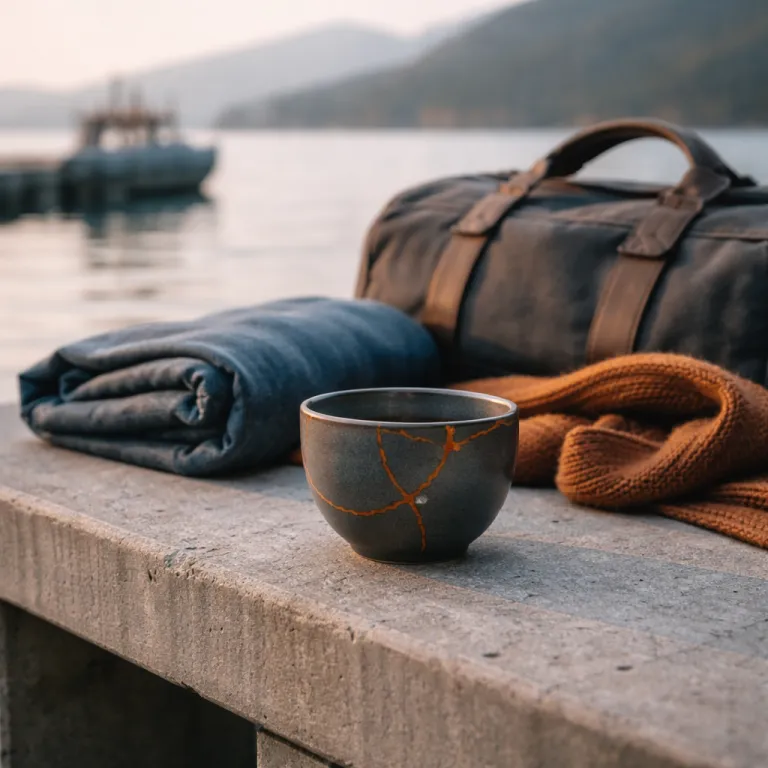
From reset fantasies to kintsugi philosophy healing travel
Wellness marketing loves the word reset, as if a single retreat could erase a lifetime of broken moments. Yet a kintsugi-informed approach to healing travel invites you to carry every fracture with you, and to let the journey trace those cracks with care rather than sand them away. In this frame, travel becomes less about escape and more about a healing journey that honours the full lines of your life.
Kintsugi, the Japanese art of repairing broken pottery with lacquer and gold powder, is often reduced to an Instagram metaphor for resilience and strength. In reality, this philosophy emerged from a precise craft practice, where artisans studied the broken pieces, understood the stress lines, and then designed a repair that made the damage visible yet structurally sound. That is the kind of kintsugi healing most travelers secretly need, not a spa promise of perfection, but a considered repair that respects what has already happened.
When you approach healing travel through kintsugi philosophy, you stop asking a destination to fix you and start asking how it might help you experience kintsugi in daily life. The kintsugi metaphor shifts the focus from transformation as replacement to transformation as repair, where beauty and wisdom accumulate exactly where things once broke. This is the quiet but profound difference between a wellness trip that sells fantasy and a kintsugi journey that builds real resilience.
In Japan, kintsugi artisans speak of the work as a long practice rather than a quick art project, and that time scale matters for mindful travelers. A single kintsugi class in Kyoto or Kanazawa will not rewrite your kintsugi story, but it can offer a tactile understanding of how gold follows the fault lines instead of hiding them. That physical experience often lands more deeply than any book on kintsugi you might read on the flight over.
Wellness itineraries that lean into Japanese culture at its most honest will often weave in related contemplative arts. A tea ceremony, an ikebana session, or a slow walk in a cedar forest shows how Japanese art treats impermanence, absence, and the beauty in imperfection as non negotiable truths. In that context, kintsugi practice feels less like a trendy workshop and more like one expression of a wider Japanese philosophy of repair and acceptance.
Travelers who are used to programmes promising total transformation sometimes resist this emphasis on the broken and the incomplete. Yet the most sustainable healing journey acknowledges that life will crack again, and that resilience is the capacity for repeated repair rather than a single dramatic breakthrough. Kintsugi-inspired healing travel, at its best, trains you to keep finding strength in those future fractures instead of fearing them.
One dataset often cited in cultural programming circles estimates around fifty dedicated kintsugi workshops currently operating across Japan, from urban studios to rural craft houses. This indicative figure draws on aggregated listings from regional tourism boards and traditional arts directories such as those in Kyoto, Kanazawa, and Tokyo, rather than a single official registry. For the solo explorer, this scarcity can be an advantage; it forces you to choose experiences that value depth over volume.
When you sit with a kintsugi artisan, you see how every decision in the repair process carries philosophical weight. Do you trace the crack in a thin, almost private line of gold, or do you widen it into a bold statement about damage and beauty? Those choices mirror the decisions you make in travel and in life about how visible you want your own broken pieces to be.
Wabi sabi, mono no aware and the art of designing healing journeys
Most wellness itineraries still chase symmetry, smoothness, and a kind of frictionless beauty that photographs well but rarely heals. The aesthetics behind kintsugi philosophy healing travel move in the opposite direction, guided by wabi sabi, mono no aware, and the Japanese concept of ma, or meaningful space. These ideas reshape how we think about the journey itself, not just the destination or the spa menu.
Wabi sabi, often mistranslated as rustic charm, is really about the beauty in imperfection and the quiet strength of things that show their age. When you walk through a wooden ryokan corridor where the floorboards creak and the paper screens carry faint stains, you are moving through a living kintsugi story rather than a showroom. That same acceptance of wear and broken history can inform how you design your own healing journey, from the pace of your days to the way you hold your past.
Mono no aware, the awareness of transience, is the emotional undercurrent of much Japanese culture. Cherry blossoms, autumn leaves, and even a fading incense trail remind you that every experience, every journey, and every phase of life will end. Healing travel that honours this wisdom does not promise permanent transformation; it offers tools to meet change with resilience instead of denial.
Then there is ma, the charged space between things, which is where many of the most powerful travel experiences actually happen. In a kintsugi repair, the gold filled lines are a kind of ma made visible, a luminous pause between broken edges that turns absence into art. Thoughtful retreat design uses ma in time and space, leaving unscheduled mornings, quiet corners, and unstructured walks so that your own understanding can surface.
Some of the most effective healing work on the road happens in these gaps rather than in formal sessions. A forest bathing walk in a cedar grove outside Kyoto, with no talking and no agenda, can do more for your nervous system than an over programmed wellness schedule. That is why the best kintsugi philosophy healing travel itineraries feel spacious, allowing your internal lines to rearrange themselves slowly.
Families and solo travelers alike can apply these principles far from Japan. A restorative itinerary in the Scottish Highlands, for example, can be designed as a kind of landscape based kintsugi journey, where weather, silence, and rugged terrain hold your broken pieces without trying to fix them. For a thoughtful example of this approach, look at this restorative Scotland family vacation, which treats nature, slowness, and shared experiences as the real teachers.
What matters is not whether you are near a Japanese art studio, but whether your itinerary respects the philosophy kintsugi embodies. Are there moments to read a book on kintsugi on the train, to journal about your own kintsugi story, or to sit with a difficult memory without rushing to the next activity? These pauses are the travel equivalent of letting lacquer dry between layers in a kintsugi practice.
Data from cultural tourism boards in Japan shows steady growth in visitors seeking traditional craft experiences rather than only major landmarks. That shift suggests a hunger for more profound, hands on wisdom rather than passive sightseeing. For wellness minded travelers, aligning with that trend means choosing journeys that prioritise practice over performance, and repair over reinvention.
How to experience kintsugi without turning it into wellness décor
Kintsugi has become a shorthand in wellness marketing, often reduced to a gold veined bowl on a massage room shelf. To travel with integrity, you need to move beyond the image and into the actual work, respecting kintsugi as both Japanese art and living philosophy. That starts with how you choose to experience kintsugi on the road.
In Japan, many studios now offer a structured kintsugi class where you repair a small cup or plate under the guidance of an artisan. These sessions usually last several hours, because real kintsugi repair involves multiple stages of lacquer application, drying, sanding, and finally dusting with gold or silver. The slowness itself becomes a kind of meditation, a tactile healing journey where your hands learn what your mind has only read about.
Outside Japan, kintsugi workshops are appearing in high end retreat programming, sometimes described as meditation by another name. The risk is that the kintsugi metaphor gets flattened into a feel good slogan, with little attention to Japanese culture, materials, or technique. As a traveler, you can counter this by asking who leads the kintsugi practice, how they were trained, and whether the class acknowledges its roots in Japanese art.
One practical filter is to look for programmes that collaborate with kintsugi artisans or kintsugi healing practitioners rather than generic craft facilitators. The dataset on traditional arts suggests that there are around fifty dedicated kintsugi workshops across Japan, including well known studios in Kyoto, Kanazawa, and Tokyo, which means any retreat claiming dozens of in house masters deserves a closer look. Authentic experiences will usually emphasise the imperfections of your repair, the awkward lines, and the stubborn broken pieces that refuse to sit neatly.
Urban retreats can also integrate this philosophy without staging a full kintsugi class. A mindful escape in Rome, for example, might use the city’s layered ruins as a living kintsugi story, inviting guests to walk the cracks between ancient stones and modern cafés. One thoughtful case study is this mindful escape in Rome, where the emphasis falls on slow walks, quiet mornings, and the art of noticing rather than on glossy perfection.
When you evaluate any healing journey offer, pay attention to how it talks about what is broken. Does the language promise to erase your past, or does it speak of finding strength and beauty in the existing lines of your life? Kintsugi philosophy healing travel always leans toward the second, framing transformation as a respectful repair rather than a total reset.
It also helps to remember that kintsugi is not only an art but a philosophical practice with specific objectives. As one verified explanation from cultural guides puts it, "Kintsugi repairs broken pottery with gold, embracing imperfections" and "Kintsugi symbolizes embracing flaws and imperfections, promoting emotional healing and resilience." and "Can I learn kintsugi?" "Yes, many workshops and classes teach kintsugi techniques." Those statements are not metaphors; they describe a concrete practice that you can touch, smell, and struggle with as you travel.
Some travelers like to carry a small object, perhaps a chipped cup or a cracked stone, as a private reminder of their own broken pieces during a trip. This simple ritual can anchor the kintsugi journey, turning each day’s experiences into another thin layer of lacquer over old fractures. By the time you return home, the object has not changed, but your understanding of its beauty in imperfection and your own resilience often has.
Choosing healing travel that respects both culture and your cracks
The wellness industry often sells transformation as a clean slate, but kintsugi philosophy healing travel insists that you travel with your history intact. The question is not whether you can leave your broken self behind, but whether the journey will help you relate to those fractures with more wisdom and strength. That requires both cultural sensitivity and personal honesty.
Start with the language used by a retreat or property. Offers that promise to fix everything in seven days rarely have space for the slow, layered work that real kintsugi repair represents. Look instead for programmes that speak of practice, process, and ongoing journeys, echoing how Japanese artisans describe their own work.
Cultural depth also shows up in how a place integrates Japanese culture and aesthetics. A thoughtful programme might pair a kintsugi class with a tea ceremony, a session on wabi sabi, or a forest bathing walk that explores mono no aware in a local landscape. These experiences, taken together, create a more profound understanding of how Japanese art and kintsugi philosophy frame healing as an everyday practice rather than a special event.
Sleep, often overlooked in traditional tourism, has become a central pillar of many wellness itineraries. Yet even here, the kintsugi metaphor applies; you are not trying to sleep like a different person, but to repair the broken lines in your own daily life rhythms. For a deeper dive into how rest is reshaping mindful journeys, see this analysis of the wellness industry’s obsession with sleep, and consider how those insights might support your personal healing journey.
On a practical level, ask how a retreat handles silence, unstructured time, and emotional complexity. Spaces that rush to fill every gap with activities rarely allow the kind of ma that kintsugi philosophy needs, where your own kintsugi story can surface between sessions. The most meaningful experiences often happen when nothing official is happening at all.
Ethical considerations matter as much as personal outcomes. When Japanese art forms like kintsugi, tea ceremony, or ikebana are lifted out of context, there is a fine line between respectful sharing and cultural appropriation. Look for programmes that credit their teachers, acknowledge the history of the practice, and reinvest in Japanese communities rather than treating these traditions as decorative backdrops.
Finally, remember that no single trip will complete your repair. Kintsugi philosophy healing travel is less about one perfect journey and more about a series of experiences that gradually fill the cracks with new lines of meaning. Each time you travel with this awareness, you add another thin seam of gold to the broken pieces of your life, building resilience not by erasing what hurt, but by tracing it with care.
Key figures shaping kintsugi inspired mindful travel
- Around fifty dedicated kintsugi workshops currently operate across Japan, according to cultural craft estimates, offering travelers structured opportunities to learn kintsugi repair directly from artisans. This figure is based on aggregated listings from regional tourism boards and traditional arts directories in cities such as Kyoto, Kanazawa, and Tokyo rather than a single official registry.
- Kintsugi originated in Japan roughly six centuries ago, during the late Muromachi to early Edo periods, and its ongoing practice shows how a historical Japanese art can evolve into a contemporary healing journey framework without losing its craft integrity.
- Global interest in kintsugi and related Japanese culture practices has grown steadily over the past decade, reflected in the increasing number of retreats and classes that integrate kintsugi philosophy into wellness travel programming, from small studios in Kyoto and Kanazawa to mindful travel offerings in Europe and North America.