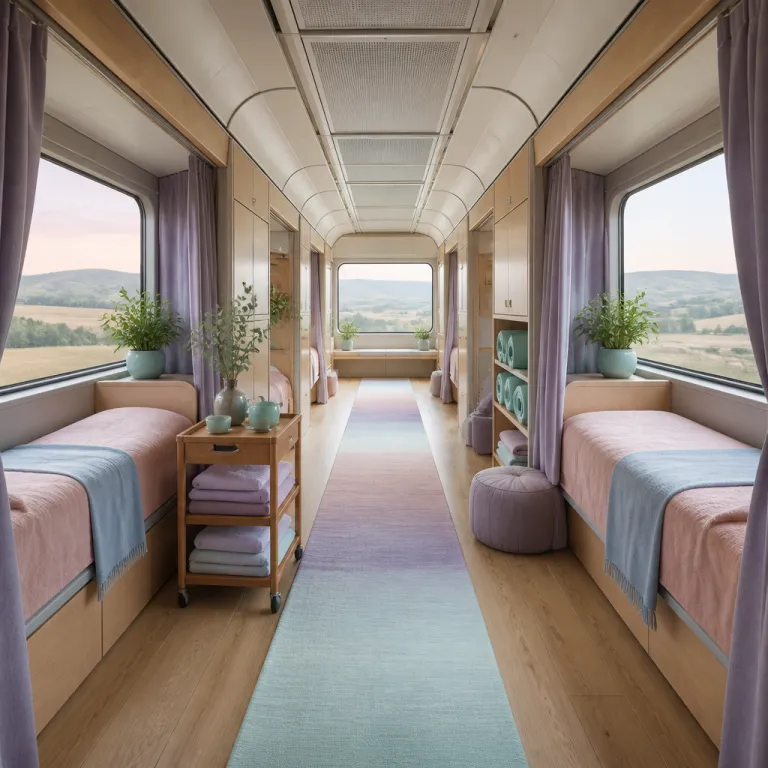
Why overnight trains are the original wellness retreat in motion
The overnight train wellness slow travel mindset starts with a single decision. You choose a train instead of a flight, a long journey instead of compressed hours, and you let time expand again. On the right trains, that choice becomes a wellness practice in itself.
Wellness professionals increasingly frame train travel as a moving retreat, where the journey, not the city at the end, does the deep work. Train operators now design sleeper trains with quiet cars, sleeper cabins, and healthier dining so that wellbeing is not an add-on but the spine of the experience. This shift mirrors the global wellness tourism market, which the Global Wellness Institute valued at over $900 billion in 2022 and expects to keep growing as travelers seek sustainable travel that feels restorative rather than extractive.
On an overnight train, stillness is enforced by design, and that is the point. Your seat becomes a small studio for breathwork, reading, and the kind of conversation couples rarely have between meetings and notifications. When the carriage lights dim, the rhythm of the rails nudges your circadian rhythm back toward something human, and the long hours between one station and the next become a meditation on distance.
For couples used to flights between Los Angeles and North American hubs, the first hour of a long rail segment can feel unsettlingly slow. Stay with it; this is where embracing slow travel begins, as landscapes replace inboxes and the phone finally leaves your hand for more than a few minutes. In that gap, future wellness habits often surface naturally, from earlier bedtimes to shared digital boundaries.
Wellness trains are not fantasy concepts; they already exist as overnight rail journeys that combine transport with curated wellbeing experiences. According to operators, their objectives are clear: “Provide relaxation during travel. Offer wellness activities onboard. Enhance passenger well-being.” When you treat these train journeys as intentional retreats, the overnight becomes more than logistics, and the arrival time feels less like a deadline and more like a gentle threshold.
The wellness case for slow rail: stillness, sleep and landscape meditation
Think of an overnight train as a rolling ashram with better linens and espresso. The wellness case is simple: trains slow you down, hold you in one place, and give your nervous system a chance to reset. When you align your sleep with the movement of the carriage, the entire journey becomes a circadian recalibration.
In sleeper cars, the best wellness-focused train operators keep lighting low, noise minimal, and movement predictable, which supports deeper rest than many city hotels. A well-designed luxury train will offer comfortable bedding, healthy dining, and sometimes guided stretching or breathwork sessions led by wellness professionals. These onboard programs are not about spectacle but about creating the conditions for real sleep, something most couples sacrifice during busy workdays.
Landscape meditation is the second pillar of overnight train wellness slow travel, and it is surprisingly powerful. You sit by the window for twenty minutes, then forty minutes, then an hour, and the countryside becomes a moving mandala that steadies the mind. On long train trips, this simple act of watching fields, rivers, and mountains pass can feel more therapeutic than a formal class.
For those used to short-haul flights, the idea of spending many hours between train stations may sound inefficient. In practice, that long duration is the wellness feature, not the flaw, because it removes the constant decision-making of airports and transfers. You board once, settle into your seat or berth, and let the journey unfold without needing to choose anything more complex than tea or espresso.
As sustainable travel gains moral weight, this mode of movement also carries ethical ease. Rail emits roughly 10–30 grams of CO₂ per passenger kilometre on many European routes, compared with 150–250 grams for short-haul flights, according to comparative data from the European Environment Agency and the UK Department for Business, Energy & Industrial Strategy. If you are building a personal travel guide for the next decade, anchoring it in low-carbon train travel is one of the most aligned decisions you can make, and resources like our curated overview of emerging wellness openings can help you pair rail routes with meaningful stays.
Routes that feel like retreats: from Nightjet to the Japanese sunrise
Not every overnight train is a wellness experience; some are simply transport with beds. The art lies in choosing train journeys where the timetable, route, and onboard culture support embracing slow rather than enduring discomfort. A thoughtful travel guide will always distinguish between a luxury train designed for rest and a basic service that treats sleep as an afterthought.
In Europe, ÖBB Nightjet routes such as Vienna to Rome or Vienna to Venice are strong candidates for couples seeking restorative rail journeys. You board in the evening, often around 19:00–21:00, settle into sleeper cars with private compartments, and wake as the train glides into a historic station just minutes from the old town. The long Alpine segments lend themselves to early night routines, while the typical arrival time between 07:00 and 09:00 allows for a gentle morning walk instead of a rushed taxi dash. Sample advance fares on these routes often start around €60–€90 per person in a shared couchette and rise for private compartments, according to recent ÖBB Nightjet booking data.
Farther north, the Caledonian Sleeper between London and the Scottish Highlands offers a different kind of wellness, rooted in wild landscapes and quiet. Here, the journey north becomes a ritual: you share a simple dinner, perhaps a final espresso in the lounge car, then retreat to your berth as the train climbs into darker skies. With departures around late evening and arrivals after dawn, the contrast between urban departure and Highland arrival feels like a nervous system reset.
On the Iberian Peninsula, Trenhotel-style services between Lisbon and Madrid have long shown how overnight trains can connect creative cities while preserving sleep. Asian routes add another layer, from Sri Lanka’s coastal sleepers to Vietnam’s north–south lines and Japan’s Sunrise Seto, where hour-long segments across the Seto Inland Sea turn dawn into a moving meditation. These routes reward couples who value sustainable travel and are willing to trade a few extra hours for a deeper sense of arrival.
For those planning peak season escapes, pairing these trains with retreats that prioritise regeneration rather than spectacle is key. Our editorial on summer wellness retreats away from crowded beaches maps rail-accessible stays where the overnight train becomes part of a wider restorative arc. Used this way, train trips stop being logistics and start functioning as the quiet spine of your wellness year.
From orient express nostalgia to future wellness on rails
The legend of the Orient Express still shapes how many travelers imagine luxury train experiences. That era’s polished wood, white tablecloths, and slow travel glamour created a template for rail as theatre, but today’s wellness-minded couples are asking for something quieter. They want the elegance without the performance, the luxury without the late-night excess.
Contemporary luxury train services in North America, Europe, and Asia are responding by integrating wellness into the core design rather than as a spa add-on. Train operators partner with wellness experts and catering teams to offer lighter menus, plant-forward options, and non-alcoholic pairings that leave you ready for sleep rather than wired. Some services experiment with guided stretching in lounge cars, while others simply ensure that the seat and bedding ergonomics support spinal health during long journeys.
This is where the concept of future wellness on rails becomes interesting for mindful couples. Instead of chasing ever more elaborate hotels, you can build a travel guide around rail corridors that support regenerative tourism, from Alpine valleys to coastal wetlands. Linking these routes with carbon-negative retreats, such as those highlighted in our feature on stays that measure and repay their ecological impact, turns each overnight train into a low-impact bridge between restorative ecosystems.
Writers like Erica Firpo have chronicled how train travel is shifting from bucket-list spectacle to everyday ritual for design-literate travelers. Her work often highlights how small details, from the acoustics of sleeper trains to the choreography of train stations, shape our sense of calm. When you pay attention to these elements, you start to see each arrival time not as the end of a trip but as one movement in a longer composition.
For couples, this reframing has practical benefits: it reduces the pressure to cram days with activities and encourages a slower, more sensorial rhythm. You might spend a morning in Venice simply watching boats from a café after stepping off an overnight train, or linger in Los Angeles for an extra day to walk rather than drive. In this way, overnight rail wellness becomes less about nostalgia for the Orient Express and more about designing a contemporary life that moves at a human pace.
How to turn any sleeper train into a mindful retreat
Even when a service is not marketed as a wellness train, you can still turn most sleeper trains into personal retreats. The key is to treat the journey as a container for practice rather than dead time between obligations. That starts before you reach the station, with what you pack and how you frame the hours ahead.
For couples, a simple shared ritual can transform the mood of an overnight train from commute to ceremony. Arrive at train stations at least thirty minutes before departure, so there is no rush, and use that buffer to set intentions for the journey. Once on board, keep luggage minimal so your seat and berth feel spacious, then create a small wellness kit with herbal tea, a light eye mask, and perhaps a travel-sized essential oil.
Sleep is the non-negotiable pillar of overnight train wellness slow travel, and it deserves planning. Choose sleeper cars over reclining seats whenever possible, and if you must sit, opt for a window seat to lean against the wall for better spinal alignment. Eat lightly in the final hours before bed, skip the second espresso, and treat the rocking of the train as a metronome for slow breathing.
Mindful use of time is the second pillar, especially on long train trips that cross several days or time zones. Instead of defaulting to screens, alternate reading, journaling, and simple gaze meditation out of the window, letting the changing light guide your internal clock. Couples often find that these uninterrupted hours become the only space where deeper conversations about work, family, and future wellness plans can unfold without distraction.
Finally, remember that sustainable travel is not only about carbon metrics but also about how you arrive. Step off the train a little earlier than necessary, walk through the city instead of taking a taxi, and give yourselves minutes to feel the shift from motion to stillness. Over time, these small choices accumulate into a personal travel guide where trains, not planes, hold the most meaningful chapters, and where every arrival time marks another quiet commitment to global wellness.
FAQ
What amenities can I expect on wellness focused overnight trains ?
Many wellness oriented overnight trains now offer comfortable sleeping accommodations, healthier dining options, and quiet zones designed for rest. Some services add spa style treatments, guided stretching, or simple relaxation activities led by wellness professionals. On routes such as ÖBB Nightjet and the Caledonian Sleeper, for example, you can typically choose between couchettes and private cabins, with access to lounge cars and at-seat breakfast service; always check the specific train operator’s information, as amenities vary widely between routes and regions.
How should couples pack for an overnight train wellness slow travel journey ?
Packing light is essential so that your compartment or seat area feels calm and uncluttered. Focus on soft layers, a compact wellness kit with an eye mask and earplugs, and a refillable water bottle to stay hydrated. Bring one analogue activity such as a book or journal to reduce screen time and support better sleep.
Are wellness oriented overnight trains available worldwide ?
Wellness focused train journeys are most developed in Europe and parts of Asia, where sleeper trains remain integral to the transport network. In north america and other regions, options are more limited but still growing as interest in sustainable travel increases. Wherever you are, you can apply the same mindful principles to almost any overnight train, even if it is not branded as a wellness service.
How do I book an overnight train that supports wellness and slow travel ?
The most reliable approach is to visit the official websites of train operators on your chosen route and review their sleeper options carefully. Look for services that offer private sleeper cars, quiet coaches, and clear information about arrival time and onboard facilities. Booking well in advance usually secures better cabins and allows you to plan connecting stays that align with your wellness goals.
What makes a train journey therapeutic instead of uncomfortable ?
A therapeutic train journey balances physical comfort, psychological safety, and a sense of unhurried time. Good bedding, a stable temperature, and low noise levels support the body, while predictable schedules and respectful fellow passengers ease the mind. When these elements combine with intentional practices such as breathwork, journaling, or shared reflection, an overnight train can genuinely function as a wellness retreat on rails.