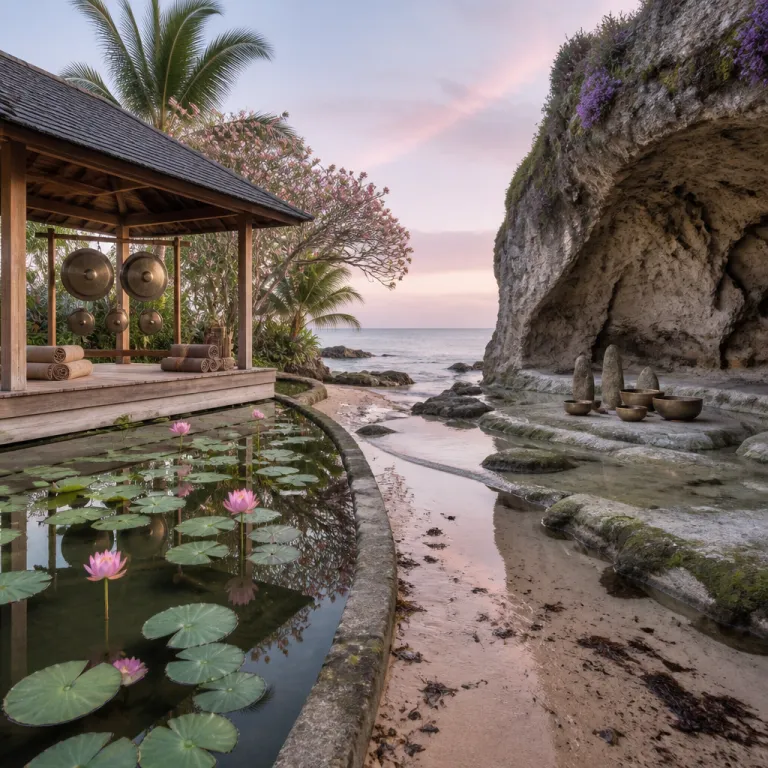
The new geography of sound: why place matters as much as practice
Sound healing retreat destinations worldwide are no longer fringe curiosities for niche seekers. They have become anchor points for wellness travelers who want practices grounded in place, tradition and measurable shifts in body and mind. When you choose a retreat or several retreats, the landscape, acoustics and cultural context shape the experience as much as the instruments themselves.
Across the globe, wellness retreat programmes now weave sound into daily yoga, breathwork and meditation rather than treating it as a decorative add on. A serious yoga retreat in an eco friendly resort spa in the mountains will feel very different from a coastal wellness retreat where waves, wind and birds become part of the score. The most thoughtful sound focused sanctuaries understand that health, wellness and geography are inseparable.
Think of sound as architecture for the nervous system, built from caves, valleys, temples and water. A gong bath in a tiled resort spa room near an airport can still be powerful, yet a similar session in a volcanic valley or sea cave often lands deeper in the body. This is where sound healing retreats offer something a standard spa with generic spa treatments rarely can: a coherent field where body, mind and landscape work together.
For the solo explorer, the question is not only which wellness retreats look perfect on a screen. It is which sound based journeys feel aligned with your current health wellness priorities, your preferred skill level and your appetite for cultural immersion. A level beginner traveler might start with short day programmes, while a more seasoned guest may seek longer stays that include daily yoga, chanting and night time sound journeys.
Bali’s gong baths and gamelan: when sound is the village heartbeat
In Bali, sound healing is not a trend; it is the background hum of daily life. Balinese gong practitioners lead gong baths that sit on a continuum with temple ceremonies, village gamelan rehearsals and family rituals. For wellness travelers, this makes Bali one of the most compelling sound healing retreat destinations worldwide, especially if you value cultural experiences as much as relaxation.
Traditional Balinese gongs are handcrafted from bronze, tuned in sets and treated almost as living beings. During a gong bath, waves of low frequency vibration move through the body, often felt as warmth, tingling or a sense of weightlessness. Local guidance explains that “a meditative experience using gong sounds for relaxation” is not a performance but a shared practice, and that distinction matters for anyone choosing between entertainment and genuine healing.
Many Bali wellness retreats integrate gong baths with yoga retreats that include sunrise asana, evening meditation and occasional temple visits. A typical yoga retreat here might offer daily yoga suitable for level beginner and beginner intermediate guests, with teachers adjusting postures to support different skill levels. Well known centres such as The Yoga Barn in Ubud or Fivelements Retreat near the Ayung River host regular sound sessions, while smaller studios invite visiting teachers with training in music therapy or nada yoga.
Accommodation ranges from simple eco friendly guesthouses to high end resort spa properties with extensive spa treatments and hydrotherapy pools. As a rough guide, shared rooms in modest centres might start around US$60–90 per night including breakfast and one daily class, while premium riverside suites can exceed US$350 per night with full board and multiple treatments. Before you check availability, look beyond marketing words like best or gold standard and read how they describe the role of sound in their health wellness philosophy, not just the size of the spa or proximity to the airport.
For travelers already exploring breathwork, cold exposure and sound baths, Bali pairs well with broader journeys through experimental wellness modalities. A useful field guide to wellness modalities worth traveling for can help you situate Balinese gong work alongside other practices, so your retreat choices form a coherent path rather than a random collection of experiences. In this way, a single retreat in Bali can become part of a longer sound focused itinerary across several continents.
Scottish singing caves: Fingal’s echo and the northern soundscape
Far from the tropics, Scotland offers a starkly different chapter in sound healing retreat destinations worldwide. Here, the instruments are basalt columns, Atlantic swells and the long reverberation of stone lined chambers. Fingal’s Cave on the uninhabited Isle of Staffa has become an informal pilgrimage site for travelers fascinated by natural acoustics and the emotional charge of echoing sound.
The cave rises roughly 20 meters high and extends about 75 meters deep, creating a cathedral like tube where every note lingers. Geological surveys and descriptions from the National Trust for Scotland, along with classic accounts such as Sir Joseph Banks’s 1772 journal, confirm its striking dimensions and hexagonal basalt structure. While you will not find a formal wellness retreat inside the cave, many wellness retreats across the west coast now build day programmes that include boat trips, shoreline walks and guided listening practices near these geological organs.
Sound healing here is less about structured yoga retreats and more about learning to listen well in wild landscapes. A simple retreat might pair morning yoga on a grassy headland with afternoon excursions to sea caves, where you sit in silence and let the roar and echo work on your body mind. Some retreats offer optional spa treatments back at a small resort spa, but the real treatments are the wind, the cold and the slow recalibration of your nervous system.
Travel logistics require more planning than a typical resort stay in the United States or a quick retreat Costa Rica style escape. Boat tours to Fingal’s Cave are weather dependent, so you should check availability well in advance and build free days into your stay to allow for changes. Expect seasonal boat trips to cost in the region of £70–120 per person, with simple guesthouses on nearby islands starting around £80–150 per night depending on the time of year.
If you are combining Scotland with other European wellness experiences, philosophy led wellness retreats on the Greek mainland offer an intriguing counterpoint. While Greece brings contemplative dialogues and structured yoga retreat programmes, Scotland brings raw elements and unscripted soundscapes. Together, they show how sound healing retreat destinations worldwide can stretch from refined to rugged while still serving the same core health wellness intention.
From India to Costa Rica and the United States: mapping global sound lineages
Beyond Bali and Scotland, several regions have emerged as key sound healing retreat destinations worldwide, each with distinct lineages. In India, nada yoga, the yoga of sound, treats vibration as a direct path to meditation, using mantra, breath and subtle inner listening. Many Indian yoga retreats weave nada yoga into daily yoga classes, offering level beginner and beginner intermediate students a structured way to explore sound without the theatrics sometimes seen elsewhere.
Retreats in Rishikesh or the Himalayan foothills often combine chanting, pranayama and silent walks with simple accommodation and vegetarian food. These wellness retreats rarely market themselves as luxury, yet for travelers focused on body mind integration, they can feel like the best value on the planet. When you check availability, pay attention to the number of nights, the size of the group and whether programmes run year round or cluster around specific festivals, which can dramatically change the energy of the retreat.
Across the Atlantic, Costa Rica has become synonymous with the phrase retreat Costa, shorthand for jungle based wellness retreats that mix yoga, sound and surf. Many Costa Rica properties position themselves as eco friendly resort spa hybrids, offering spa treatments, cold plunges and sound baths under open air pavilions. Here, sound healing might involve crystal bowls, drums and rainforest soundscapes, with some retreats offer free afternoons for surfing or simply lying in a hammock while your body recalibrates.
In the United States, Sedona, Joshua Tree and parts of the Pacific Northwest now host dense clusters of sound focused retreats. Sedona in particular trades on its vortex reputation, with wellness retreat programmes that combine gongs, didgeridoos and guided hikes to red rock formations. Quality varies widely, so discerning travelers should look for clear information on teacher training, health wellness credentials and how sound sessions are integrated with movement, rather than tacked on as a novelty.
Across these regions, the most grounded sound healing retreat destinations worldwide share a few traits. They articulate how sound supports specific health outcomes, they respect local traditions and they give guests enough free time to process rather than rushing from one activity to the next. Whether you choose India, Costa Rica or the United States, prioritise retreats where sound is treated as a serious practice, not just a marketing hook.
Science, safety and choosing the right sound healing retreat for you
As sound healing retreat destinations worldwide multiply, separating substance from spectacle becomes essential. Clinical research into vibration therapy, music therapy and low frequency sound suggests benefits for stress reduction, sleep quality and perceived pain, though results vary by individual. For example, a 2016 observational study by Landgraf and colleagues in the Journal of Evidence-Based Complementary & Alternative Medicine reported reduced tension, anger, fatigue and depressed mood after a single sound meditation session, while a 2013 review by Stefan Koelsch in Trends in Cognitive Sciences summarised evidence that music can modulate autonomic nervous system activity, hormone release and emotional regulation. The most responsible wellness retreats acknowledge this nuance, positioning sound as one tool among many for supporting health, not a miracle cure.
When evaluating a wellness retreat or yoga retreat, start with the basics: who is leading the sessions, what is their training and how do they describe the intended effects on the body. A credible programme will explain how sound interacts with the nervous system, breath and posture, and how sessions are adapted for different skill levels from level beginner to advanced practitioners. Look for clear outlines of the schedule, including how many sound sessions you will actually experience, and whether daily yoga or meditation is included to help integrate the work.
Safety matters, especially if you have a history of migraines, trauma or sensory sensitivity. Intense gongs or gongs played too close to the body can feel overwhelming rather than healing, so a good teacher will invite you to move, sit near the exit or even use earplugs. In a resort spa setting, ask how loud sessions typically are, whether there are quieter options and how they handle guests who feel unwell during treatments.
Cost structures vary widely across sound healing retreat destinations worldwide, from simple ashrams with almost free donation based programmes to high end resort properties that price like gold. Price alone does not indicate quality; some of the best experiences happen in modest spaces where the teacher’s presence matters more than the décor. Before you check availability, read reviews that mention how guests felt in their body mind after the retreat, not just how beautiful the rooms or spa treatments were.
For ongoing practice, many travelers now build a personal circuit of wellness retreats they return to year round, alternating between quieter yoga retreats and more intensive sound journeys. Over time, this creates a living map of places where you know your health wellness is genuinely supported. In a landscape crowded with options, that kind of lived knowledge is the real luxury, far more valuable than any marketing promise of the united best or most perfect retreat on earth.
FAQ: sound healing journeys and mindful travel
What is a gong bath and how does it feel physically ?
A gong bath is a meditative experience using gong sounds for relaxation, typically delivered with participants lying down while a practitioner plays for 45 to 90 minutes. Physically, you may feel waves of vibration moving through the body, shifts in temperature, tingling in the hands or feet and a deep sense of heaviness or lightness. Many people report that their mind quiets more quickly than in silent meditation, though responses vary and some prefer shorter sessions, especially at level beginner.
Why are places like Fingal’s Cave and Balinese temples considered powerful for sound healing ?
Locations such as Fingal’s Cave in Scotland and temple courtyards in Bali have natural or architectural acoustics that amplify and prolong sound. The height, depth and shape of Fingal’s Cave create a long reverberation time, so even a simple chant or drumbeat fills the space and lingers in the body mind. In Balinese temples, stone walls, open roofs and surrounding nature blend instrument tones with ambient sound, which many travelers experience as a more immersive and culturally rooted form of healing.
How long should a sound healing retreat last for meaningful benefits ?
For most people, a minimum of three to five duration days allows enough time for the nervous system to downshift and for patterns in sleep, mood and tension to change. Shorter day programmes or single evening sessions can still be valuable introductions, especially for beginner intermediate guests who are testing their response to sound. Longer wellness retreats of seven to ten days or more tend to support deeper integration, particularly when combined with daily yoga, rest and simple food.
How can I assess whether a sound healing practitioner is trustworthy ?
A trustworthy practitioner is transparent about their training, mentors and the traditions they draw from, and they can explain both the spiritual and physiological frameworks behind their work. They invite questions about health conditions, offer clear guidance on what you may feel in your body and emphasise consent, including the option to leave or adjust your position at any time. In retreat settings, look for teams that limit group size, adapt sessions for different skill levels and integrate sound with other health wellness practices rather than presenting it as a stand alone miracle.
Are sound healing retreats suitable for everyone, including people with medical conditions ?
Sound healing retreats can be supportive for many people, especially those managing stress, burnout or mild anxiety, but they are not a replacement for medical care. Individuals with conditions such as epilepsy, severe migraines, certain psychiatric diagnoses or recent surgery should consult a healthcare professional before attending, and may need quieter or shorter sessions. Reputable wellness retreats will ask about your health history, adjust intensity accordingly and encourage you to seek medical advice when needed, rather than promising universal results.
Sources
National Geographic; Live Science; Mayo Clinic; Landgraf, K. et al., Journal of Evidence-Based Complementary & Alternative Medicine, 2016; Koelsch, S., Trends in Cognitive Sciences, 2013; National Trust for Scotland