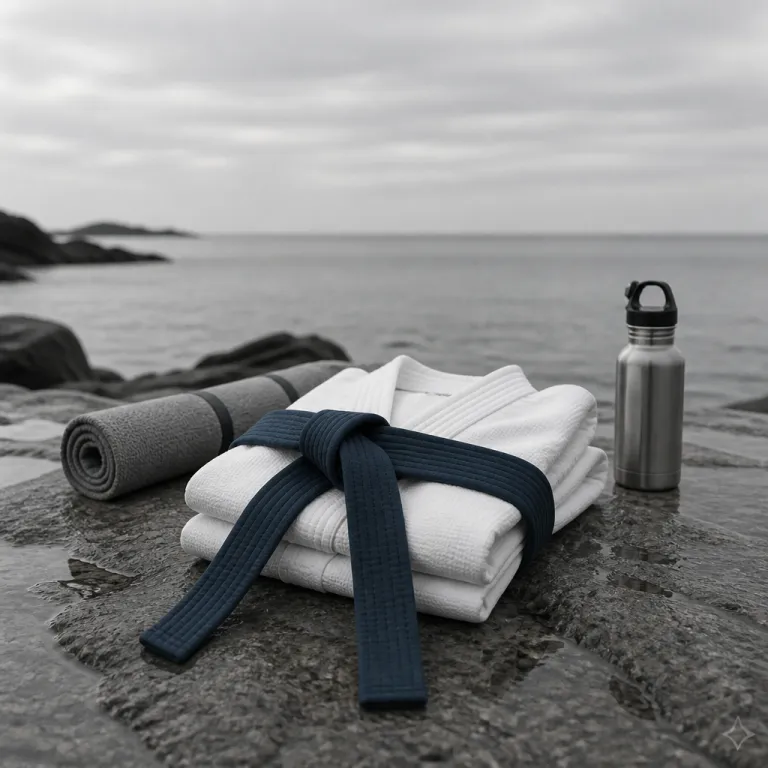
The martial arts lens on travel: restraint instead of accumulation
Most wellness itineraries promise more: more treatments, more activities, more noise dressed as calm. A martial arts approach to mindful travel begins from the opposite stance, using disciplined practice to strip a journey back to what actually shifts your body and mind. When you travel through this lens, every day becomes a deliberate round of training rather than a race to collect experiences.
In traditional martial arts, people learn that doing less with greater precision is the highest form of skill. The same principle applies to mindful journeys, where one carefully chosen place and one committed practice free you from the pressure to see everything. This is not about asceticism; it is about designing an experience where time, art, and life line up behind a single intention instead of scattering your attention across a crowded checklist.
On the mat, a martial artist refines a single movement for months until the body understands what the intellect cannot. Applied to travel, that same physical discipline invites you to select one practice focus for the trip, whether tai chi at dawn or an evening jiu jitsu class. By narrowing the frame, you open a wider internal space, a clear window into how mindfulness can help you learn better ways of moving through daily life.
This kind of martial arts–inspired travel also challenges the wellness habit of outsourcing responsibility to programmes and schedules. In aikido, for example, the discipline is to meet force with softness, which teaches people to respond rather than react when plans change on the road. Instead of chasing the best spa or the newest trend, you start asking which training will help your body–mind system become more responsive, more honest, and more free.
Research on mindful movement practices, including tai chi and qigong, is increasingly clear about the mechanisms at work. Peer-reviewed reviews in journals such as Frontiers in Psychology and accessible summaries in outlets like Psychology Today highlight three recurring themes: focusing on present-moment awareness through movement, fostering mindfulness and simplicity, and emphasising minimal effort for maximum effect. Those three lines describe not only the heart of martial arts but also the essence of a trip built around one physical practice and one clear intention.
For the solo explorer, this approach is disarmingly practical. You choose a single art, a single teacher, and a single rhythm for the day, then let repetition do the work. Over time, routines that once felt foreign become anchors, helping you find stillness in unfamiliar streets, crowded markets, and long train rides.
Training as travel: tai chi in Wudang, aikido in Tokyo, Muay Thai in Chiang Mai
Some of the most powerful martial arts experiences happen when you let the dojo or training ground define the journey. In China’s Wudang Mountains, early morning tai chi classes turn misty courtyards into open-air temples where movement-based mindfulness becomes tangible. You stand in a circle of fellow students, moving slowly in unison, and the body begins to understand that physical softness can coexist with inner discipline.
These Wudang programmes are not spa breaks; they are structured training blocks where each day repeats the same sequence until it imprints on your body–mind connection. The physical discipline of holding low stances for long minutes teaches you more about your own resistance than any lecture on personal growth. Many travellers arrive expecting a gentle wellness retreat and leave with legs shaking, lungs expanded, and a quieter relationship to discomfort.
Japan offers a different angle through aikido dojos that accept short-term visitors in cities like Tokyo and Osaka. Here, martial arts are woven into daily life, with office workers stepping onto the tatami after work to round out their day. As a guest, you learn best by copying rather than asking, watching how people bow, fall, and rise, and you realise that the most memorable cultural lessons are often physical rather than verbal.
In Chiang Mai, Muay Thai camps now sit at the intersection of active wellness tourism and traditional fight culture. Thailand’s tourism authorities have publicly framed Muay Thai training as a wellness component, positioning it alongside meditation and massage for travellers seeking a more physical experience. The reality on the ground is that a single round on the pads can feel like a week of cardio, yet many describe a paradoxical mental rest that comes from such focused exertion.
What unites Wudang, Tokyo, and Chiang Mai is not style but structure. Each place offers a clear container for martial arts–based mindful travel, where your time is organised around morning and evening sessions rather than sightseeing marathons. Between classes, you are free to wander slowly, letting the training help you process the city instead of rushing to tick off attractions.
If you are curious about how ancient practices shape modern wellness maps across Asia, look at how Chinese healing traditions are influencing regional travel patterns in this analysis of healing tourism quietly reshaping Southeast Asia’s wellness map. The same forces are now elevating martial arts from fringe activity to central pillar in many mindful itineraries. For the traveller, the opportunity is to treat each training hall as both classroom and sanctuary, where art and life meet in the most literal sense.
What the mat teaches that wellness retreats rarely touch
Most wellness retreats are designed to keep people comfortable, while serious martial arts training is designed to keep you honest. On the mat, you cannot outsource effort; your body, breath, and attention either show up or they do not. That is why a practice-led, movement-focused trip often produces deeper shifts than a week of passive treatments, even when the accommodation is simple and the schedule repetitive.
Consider a jiu jitsu class in Rio or Lisbon, where visitors can drop into local academies for evening sessions. The first time a black belt pins you to the floor, you meet the limits of your physical strength and your mental stories in the same instant. In that compressed moment, the body–mind system receives a direct lesson in humility, resilience, and the difference between panic and presence.
Brazilian jiu jitsu in particular has become a quiet pillar of mindful travel for solo explorers. You arrive in a new city, find a reputable academy, and step into a room full of strangers who share the same art and the same unspoken code. Within one round of sparring, you have a shared language that cuts through cultural barriers more quickly than any small talk in a café.
These experiences are not always gentle, yet they are profoundly regulating. Grappling forces you to find stillness under pressure, to use technical precision instead of brute force, and to notice how your breath changes when you feel trapped. Over time, this kind of learning process seeps into daily life, helping you stay calmer in airport queues, crowded metros, and the inevitable travel delays.
There is also a social dimension that many wellness programmes lack. Dojos and camps attract people who are serious about personal growth but allergic to performative spirituality, which makes conversations after class unusually grounded. You share stories about injuries, teachers, and cities, and you realise that martial arts communities can be some of the best informal guides to a place.
For travellers interested in philosophy-led wellness beyond Asia, there are emerging programmes in Europe that echo this ethos. Greece, for example, now hosts several philosophy-led retreats that pair contemplative practice with simple, disciplined daily structures, as explored in this guide to mainland philosophy based wellness retreats. The common thread is a respect for structure, repetition, and the quiet authority of teachers who care more about your practice than your Instagram feed.
Designing a martial arts philosophy itinerary: how to choose, how to stay honest
Planning a trip around martial arts and mindful travel starts with subtraction, not addition. Choose one primary discipline, one main place, and one clear intention for your time away. Everything else becomes optional, which is where the sense of being free on the road actually begins.
When evaluating training options, look for signs of real discipline rather than tourist packaging. Authentic schools prioritise consistent daily training, clear etiquette, and a focus on learning fundamentals over photo opportunities. Ask how many classes run each day, whether visitors train alongside locals, and how instructors integrate mindfulness into physical drills rather than bolting on a token meditation session.
Be wary of programmes that promise transformation without effort. In true martial environments, people are expected to show up on time, bow in, and respect the art regardless of rank or background. A good teacher will help you adapt movements to your body while still insisting on the physical discipline that makes the practice meaningful.
Digital life adds another layer to this design. Social platforms can act as a window into dojos worldwide, yet they can also distort expectations, especially when every frame shows only highlight reels. Use tools like Facebook groups or community pages to check whether a school shares updates about regular classes, local events, and long-term students rather than only curated retreat content.
Once on the ground, keep your daily structure simple. Anchor the day around one morning and one evening session, then let unstructured time fill with slow walks, local food, and quiet reflection instead of frantic sightseeing. This rhythm allows the body–mind system to integrate what it learns on the mat into the rest of your life, turning the whole journey into a continuous, low-key meditation.
For inspiration on how a single focused practice can shape an entire itinerary, look at slow travel case studies such as this guide to mindful encounters and slow immersion in Baja California Sur. The details differ, but the principle is the same: choose one core experience, commit to it fully, and let everything else arrange itself around that disciplined centre.
Key figures shaping martial arts based mindful travel
- Systematic reviews of tai chi and qigong interventions in journals such as Frontiers in Psychology report consistent associations between mindful movement programmes and reductions in perceived stress and anxiety, supporting the use of structured martial arts practice within wellness-oriented travel.
- Wellness tourism reports from organisations such as the Global Wellness Institute indicate that active trips combining physical challenge with contemplative practices have expanded steadily over recent years, with martial arts training camps now listed alongside yoga, trekking, and meditation in major tour operator catalogues worldwide.
- National tourism boards, including Thailand’s Tourism Authority, have begun positioning Muay Thai training as a core wellness tourism component in their promotional materials, signalling a shift from purely combat sport branding toward holistic body–mind experiences.
- Global surveys of solo travellers consistently indicate that opportunities for personal growth and learning new skills rank among the top motivations for wellness-focused trips, aligning closely with the discipline and repetition at the heart of martial arts-inspired mindful travel.